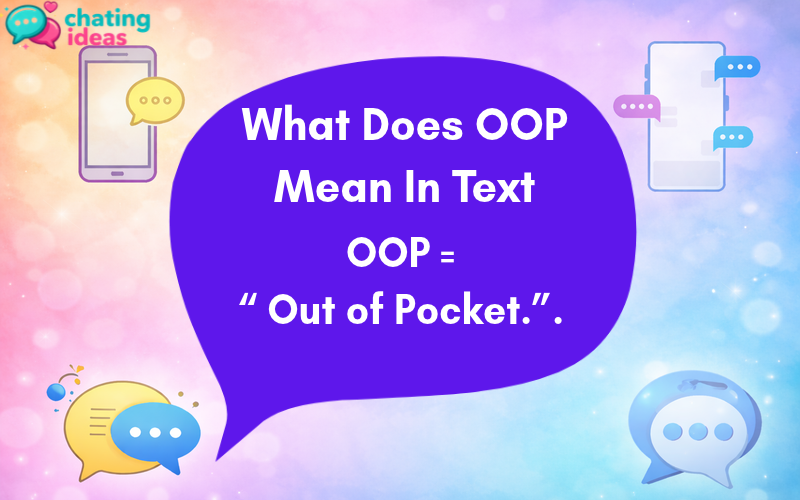

OOP mean in text usually stands for “Out of Pocket.” People use this short form in text messages and on social media when someone says or does something strange, wild, unexpected, or inappropriate. For example, if your friend makes a very strange joke, you might say, “That was OOP!” to show that their words surprised you. The exact meaning can change with the conversation, but “Out of Pocket” is a common meaning of OOP in online slang.
People use short words like OOP because they make chatting quick and easy. You may see this term in messages, comments, memes, and funny videos. Sometimes, it is used when someone acts in a silly way. Other times, it can describe a comment that goes too far or makes people feel uncomfortable.
In this guide, you will learn what OOP means in text, how people use it, and what it means in different situations. You will also see simple examples, common replies, and other meanings of OOP. Everything is explained in easy English so you can understand it without any trouble.
Related Post: What Does IGG Mean in Text? Simple Meaning and Examples
What Does OOP Mean in Text?
OOP often means “Out of Pocket” in online slang. People use it when someone says something wild, acts in an unexpected way, or crosses a line.
For example, imagine that your friend says something very funny but a little rude. You might reply, “Bro, that was OOP!” This means that your friend said something unexpected or went too far.
OOP can also show surprise. You do not always have to be angry when you use it. Sometimes, you may use it while laughing at a friend’s silly words or actions.
Here is a simple example:
- Friend: I told my teacher that her homework was harder than a math test.
- You: Bro, that was OOP 😂
In this chat, OOP shows that the friend’s comment was bold and unexpected. The laughing emoji makes the reply sound playful.
What Does Out of Pocket Mean?
The phrase “Out of Pocket” can have different meanings, depending on how people use it. In online slang, it often describes words or actions that are wild, rude, inappropriate, or beyond what people expect.
For example, if someone makes a joke about a serious topic, another person might say, “That was out of pocket.” They mean that the joke was not suitable for the situation.
The phrase can also describe someone who behaves in a very surprising way. A person might say something so bold that everyone in the room becomes quiet. Someone could then use OOP to describe that moment.
However, “out of pocket” has other meanings outside internet slang. In everyday English, it can mean paying for something with your own money. It can also mean being unavailable or away from normal duties in some situations.
That is why it is important to read the whole message before deciding what OOP means.
Why Do People Use OOP in Text Messages?
People use OOP because it is short, easy, and useful in casual conversations. It can express a reaction without needing a long sentence.
Here are some common reasons people use it.
To Show Surprise
People often use OOP when someone says or does something they did not expect.
For example:
- Friend: I finished the whole pizza by myself.
- You: OOP 😭
Your reply shows that you are surprised by what your friend did. It may also mean that you find the situation funny.
To Point Out a Rude Comment
Sometimes, a person says something that hurts another person’s feelings. OOP can describe that comment.
For example:
- Alex: Your haircut looks like a bird’s nest.
- Sam: That was OOP.
Here, Sam thinks Alex’s words were rude or went too far.
To React to Something Funny
OOP can also be used when a person does something silly or makes a bold joke.
For example:
- Mia: I waved at someone who was waving at the person behind me.
- Emma: OOP 😂
Emma uses OOP to react to an awkward but funny moment.
To Talk About Unexpected Actions
People may use OOP when someone does something unusual or surprising.
For example:
- A: He sang loudly in the middle of the store.
- B: That is so OOP!
This means that his action was unexpected and may have surprised other people.
Where Is OOP Used?
OOP is mostly seen in casual online conversations. It is not limited to one app or website. People may use it anywhere they talk with friends or share funny content.
OOP on TikTok
On TikTok, people may use OOP in comments, captions, and videos. It can describe a funny moment, a bold statement, or an action that goes too far.
For example, someone might post a video of a friend making a shocking joke. A viewer may comment, “OOP, they really said that!” This shows surprise at what happened.
The meaning depends on the video. It may be playful, serious, or critical.
OOP on Instagram
People may use OOP in Instagram comments, stories, and direct messages. It can be a quick reaction to a friend’s post or a funny picture.
For example:
- Friend: Posts an embarrassing photo of you.
- You: OOP, why would you post that? 😂
This reply shows surprise and may also suggest that your friend has gone a little too far.
OOP on Snapchat
Friends may use OOP on Snapchat when they share pictures, videos, or quick messages.
For example:
- A: I accidentally sent my teacher a message meant for my best friend.
- B: OOP 😭
The reply shows that the situation sounds awkward and unexpected.
OOP on WhatsApp
OOP can also appear in WhatsApp chats and group messages. People may use it while talking about funny events, surprising news, or unusual things that happened during the day.
For example:
- A: My brother told everyone my secret.
- B: OOP, that was not cool.
Here, OOP introduces a reaction to something unexpected. The rest of the message makes it clear that the speaker is unhappy.
How to Use OOP in Text
Using OOP is simple when you understand the situation. You can use it alone or add a few words to explain your reaction.
Use OOP When Something Surprises You
If your friend says something unexpected, you can reply with OOP.
Example:
- Friend: I stayed awake all night playing games.
- You: OOP, how are you even awake?
This reply shows surprise and invites your friend to explain more.
Use OOP When Someone Goes Too Far
You can use OOP when a person makes a rude joke or says something inappropriate.
Example:
- A: I told him nobody liked his new song.
- B: OOP, that was harsh.
Here, OOP shows that the comment was too strong or hurtful.
Use OOP in Funny Conversations
OOP can make a playful conversation more lively.
Example:
- A: I tried to cook and burned the toast.
- B: OOP 😂
This is a lighthearted way to react to a small mistake.
Use OOP to React to Gossip
Friends sometimes use OOP when they hear surprising news about another person.
Example:
- A: She told him she liked him in front of the whole class.
- B: OOP! I did not expect that.
The reply shows that the news was surprising.
OOP Meaning in Text: Examples and Uses
The meaning of OOP becomes easier to understand when you see it in different conversations.
| Situation | Example Message | What OOP Means |
|---|---|---|
| Funny moment | “OOP 😂, you fell asleep during the movie.” | A playful reaction to something unexpected |
| Rude comment | “That was OOP. You did not need to say that.” | Someone went too far |
| Surprise | “OOP! He really said that?” | Shock or surprise |
| Awkward moment | “OOP, wrong chat!” | A reaction to an embarrassing mistake |
| Bold action | “She asked him that in front of everyone. OOP!” | A reaction to something unexpected or daring |
These examples show that OOP does not always express the same feeling. It can show surprise, humor, awkwardness, or disapproval. The words around it help you understand the speaker’s meaning.
What Does OOP Mean on Social Media?
On social media, OOP is often used as a reaction to something surprising or unusual. It may appear in comments, captions, memes, and replies.
For example, a person might share a video of someone saying something very bold. Another user may comment, “OOP, they are not holding back!” This means that the person spoke very openly and may have said something others would not normally say.
OOP is also common in playful conversations between friends. One friend may share an embarrassing story, and another may reply with “OOP” to show surprise or amusement.
However, not every use of OOP is funny. Sometimes, it points out that a person has been rude or disrespectful. If the message is about a serious problem, OOP may show that the speaker thinks someone crossed a line.
Always look at the post, the message, and the relationship between the people to understand the intended meaning.
Is OOP a Good or Bad Word?
OOP is not a bad word by itself. It is a slang term that people use to react to something unexpected. Whether it sounds friendly or negative depends on the situation.
For example, if your friend makes a silly mistake and you reply with “OOP 😂,” it may sound playful. You are showing that you noticed the mistake and found it funny.
But if someone says something hurtful and you reply, “That was OOP,” your words may sound serious. You are telling the person that their comment was inappropriate or went too far.
OOP can also sound sarcastic. A person may use it to make fun of someone’s behavior, especially in a public comment. This can upset the other person if they feel embarrassed.
If you are unsure how someone will understand your message, add a few clear words. For example, “OOP, that was funny” sounds different from “That was out of pocket and not okay.” The extra words help show your meaning.
Is OOP Rude in Texting?
OOP is not always rude. It depends on why you use it and what you are talking about.
If you use it to react to a funny or harmless event, it usually sounds casual. Friends may use it while laughing, joking, or talking about surprising things.
For example:
- A: I forgot my own phone number.
- B: OOP 😂
This is a playful reaction and does not have to be rude.
On the other hand, OOP can point out rude behavior. If someone makes a cruel joke about another person, replying with “That was OOP” may mean that the joke was not okay.
The tone can also change with emojis and other words. A laughing emoji may make the message feel playful, while a serious sentence may show disapproval.
If someone sends you OOP, do not assume they are angry. Read the full conversation first. They may be joking, surprised, or simply reacting to something unexpected.
What Is the Difference Between OOP and Oops?
OOP and oops may look similar, but they do not always mean the same thing.
OOP is often short for “Out of Pocket” in internet slang. It can describe something wild, rude, or unexpected.
Oops is a word people use when they make a mistake or notice that something has gone wrong.
For example:
- A: I told everyone your surprise party plan.
- B: Oops, you were not supposed to tell them!
In this example, oops shows that a mistake happened.
Now look at another example:
- A: He made a joke about her in front of everyone.
- B: That was OOP.
Here, OOP means the joke was inappropriate or went too far.
The two words may appear in similar conversations, but their meanings are different. You should use the surrounding message to understand which meaning fits best.
What Are Other Meanings of OOP?
Although “Out of Pocket” is a common meaning of OOP in internet slang, the abbreviation can mean other things in different settings.
OOP Means Object-Oriented Programming
In computer science, OOP stands for Object-Oriented Programming. It is a way to write computer programs by organizing code into objects.
People use this meaning when talking about coding, software, or programming classes.
For example:
- A: What are you learning in your coding class?
- B: We are learning OOP.
In this conversation, OOP does not mean “Out of Pocket.” It refers to a programming method.
OOP Can Mean Out of Pocket in Money Matters
In money-related conversations, “out of pocket” often means that someone has to pay for something using their own money.
For example:
- A: Did your insurance pay for the repair?
- B: No, I had to pay $100 out of pocket.
Here, the phrase describes money that the person paid themselves.
OOP Can Mean Someone Is Unavailable
In some work chats, people use “out of pocket” to mean they are away or unavailable for a period of time.
For example:
- A: Can you join the meeting at 3 PM?
- B: I will be OOP this afternoon.
In this work-related message, the speaker may mean that they will be unavailable. However, this use is less clear than writing “I will be unavailable this afternoon,” so the full phrase is often better.
These meanings show why context matters. A message about jokes or social media is different from a message about coding, money, or work.
How to Reply When Someone Says OOP
Your reply depends on what the other person means. You do not need to use another slang word every time. A simple response is often enough.
If They Are Surprised
If someone sends “OOP!” because they are surprised, you can explain what happened.
Example:
- Friend: OOP! You really did that?
- You: Yes, I did! 😂
This keeps the conversation friendly and easy.
If They Think You Went Too Far
If someone says your words were OOP, they may feel that your comment was rude or inappropriate.
You can reply calmly.
Examples:
- “Sorry, I did not mean to upset you.”
- “You are right. That was too much.”
- “I was joking, but I understand.”
These replies show that you care about the other person’s feelings.
If They Are Joking
Sometimes, OOP is only a funny reaction. You can reply with a joke or laugh if you are comfortable.
Example:
- Friend: OOP 😂
- You: I know, that was wild!
There is no need to take every use of OOP seriously.
If You Do Not Understand the Message
If you cannot tell what OOP means, you can ask the person directly.
For example:
- Friend: OOP!
- You: What do you mean? 😂
This is better than guessing and misunderstanding the conversation.
Should You Use OOP in Formal Messages?
OOP is mostly used in casual chats, social media posts, and conversations with friends. It is not the best choice for formal messages because some people may not know what it means.
For example, if you are writing to your teacher, boss, or customer, it is better to explain your point in clear words.
Instead of writing:
“That comment was OOP.”
You could write:
“That comment was inappropriate.”
The second sentence is easier to understand in a professional setting.
You should also avoid using slang in important work emails, school assignments, and official documents unless the situation calls for an informal tone.
With friends, however, OOP can be a quick and natural way to react to a surprising moment. The most important thing is to choose words that fit the person and the situation.
Common Mistakes People Make When Using OOP
People sometimes misunderstand OOP because it can have different meanings. Here are a few simple mistakes to avoid.
Thinking OOP Always Means Out of Pocket
In internet slang, OOP often means “Out of Pocket,” but it can mean something else in other settings. In a coding discussion, for example, it may mean “Object-Oriented Programming.”
Always check the topic before deciding what the abbreviation means.
Using OOP Without Understanding the Situation
OOP can sound playful in one conversation and critical in another. If someone shares a serious problem, replying with OOP and a laughing emoji may seem unkind.
Think about the other person’s feelings before sending your message.
Believing OOP Is Always an Insult
OOP is not always negative. Friends may use it when they are surprised or amused by something silly. It can also describe behavior that crosses a line.
The full message helps you understand whether the person is joking or being serious.
Using OOP in Every Conversation
You do not need to use slang in every message. Simple words like “That was surprising” or “That was unexpected” can be clearer, especially when talking to people who do not use internet slang.
Use OOP when it fits your normal way of speaking.
Tips for Understanding OOP in Text Messages
If you see OOP in a message and are not sure what it means, these tips can help.
- Read the full message: The words before and after OOP can help you understand the meaning.
- Look at the topic: A funny conversation may use OOP differently from a work or coding discussion.
- Check the tone: Emojis, jokes, and the way someone writes can give you useful clues.
- Think about the situation: If someone made a bold or rude comment, OOP may mean “Out of Pocket.”
- Ask if you are unsure: It is okay to ask someone what they mean.
You do not need to know every slang word to understand online conversations. Taking a moment to read the context can help you understand most messages.
Hope you liked this guide. Check out these related articles too:
- What Does Blue Heart Mean in Text? Simple Guide
- BFF Meaning in Text: Simple Guide
- What Does LLYT Mean in Text? Simple Meaning and Examples
- What Does LMA Mean in Text? Simple Guide
- What Does IGG Mean in Text? Simple Meaning and Examples
FAQs
What does OOP mean in text?
OOP often means “Out of Pocket” in text slang. People use it when someone says or does something wild, unexpected, rude, or inappropriate. The exact meaning depends on the conversation.
What does OOP mean on TikTok?
On TikTok, OOP is often used in comments and videos as a reaction to something surprising, funny, or bold. It can also describe a person who has gone too far with a comment or action.
Is OOP the same as oops?
No. OOP often means “Out of Pocket” in internet slang, while “oops” is usually said when someone makes a mistake. The two terms look similar but have different meanings.
Is OOP rude?
OOP is not always rude. It can be playful or funny, but it can also show that someone thinks a comment or action was inappropriate. The situation and tone help explain its meaning.
What does OOP mean in coding?
In coding, OOP stands for “Object-Oriented Programming.” It is a way of organizing computer code using objects. This meaning is different from the slang meaning used in casual chats.
How do I reply to OOP?
You can reply based on the situation. If the person is joking, you can laugh or joke back. If they think your comment went too far, you can explain what you meant or apologize if needed.
Does OOP mean someone is shocked?
It can. In casual chats, people may use OOP to show surprise or shock after hearing something unexpected. However, the abbreviation can have other meanings, so context is important.
Can I use OOP with my friends?
Yes, you can use OOP with friends in casual conversations. It is often used to react to funny, bold, or unexpected moments. In formal messages, clear and complete words are usually better.
Related Post: What Does IGG Mean in Text? Simple Meaning and Examples
Conclusion
Now you know that OOP mean in text often refers to “Out of Pocket.” People use it when someone says something wild, makes a surprising comment, or does something that goes too far. It can be funny, playful, or serious, depending on the conversation. You may see it in text messages, social media comments, memes, and chats with friends. Reading the full message will help you understand what the person wants to say.
Remember that OOP can have other meanings, too. In coding, it stands for “Object-Oriented Programming,” while “out of pocket” can also refer to paying for something yourself or being unavailable. So, always look at the topic before deciding what OOP means. When you understand the situation, it becomes much easier to read the message and reply in the right way.
[…] Related Post: OOP Meaning in Text: Simple Meaning and Examples […]